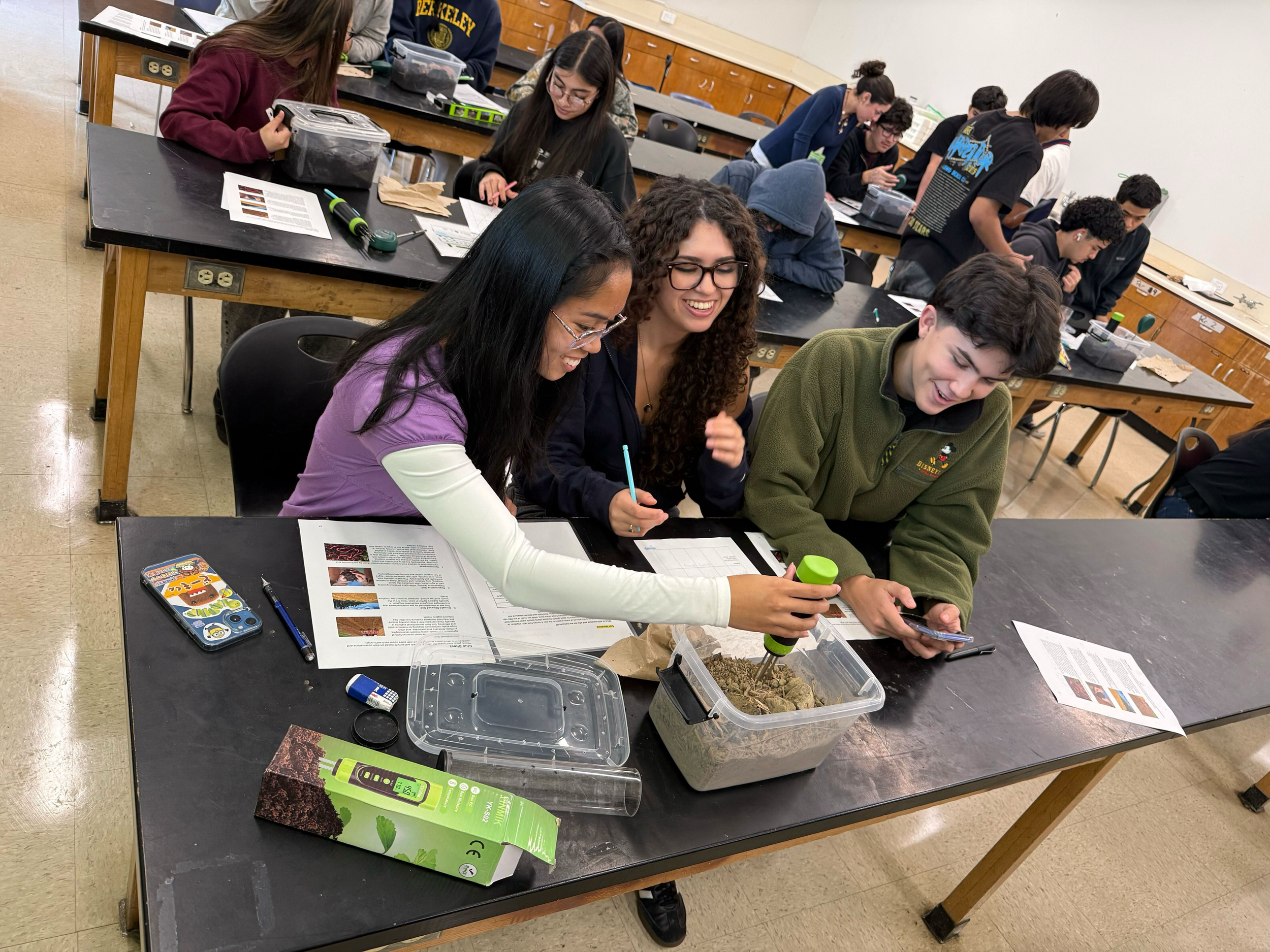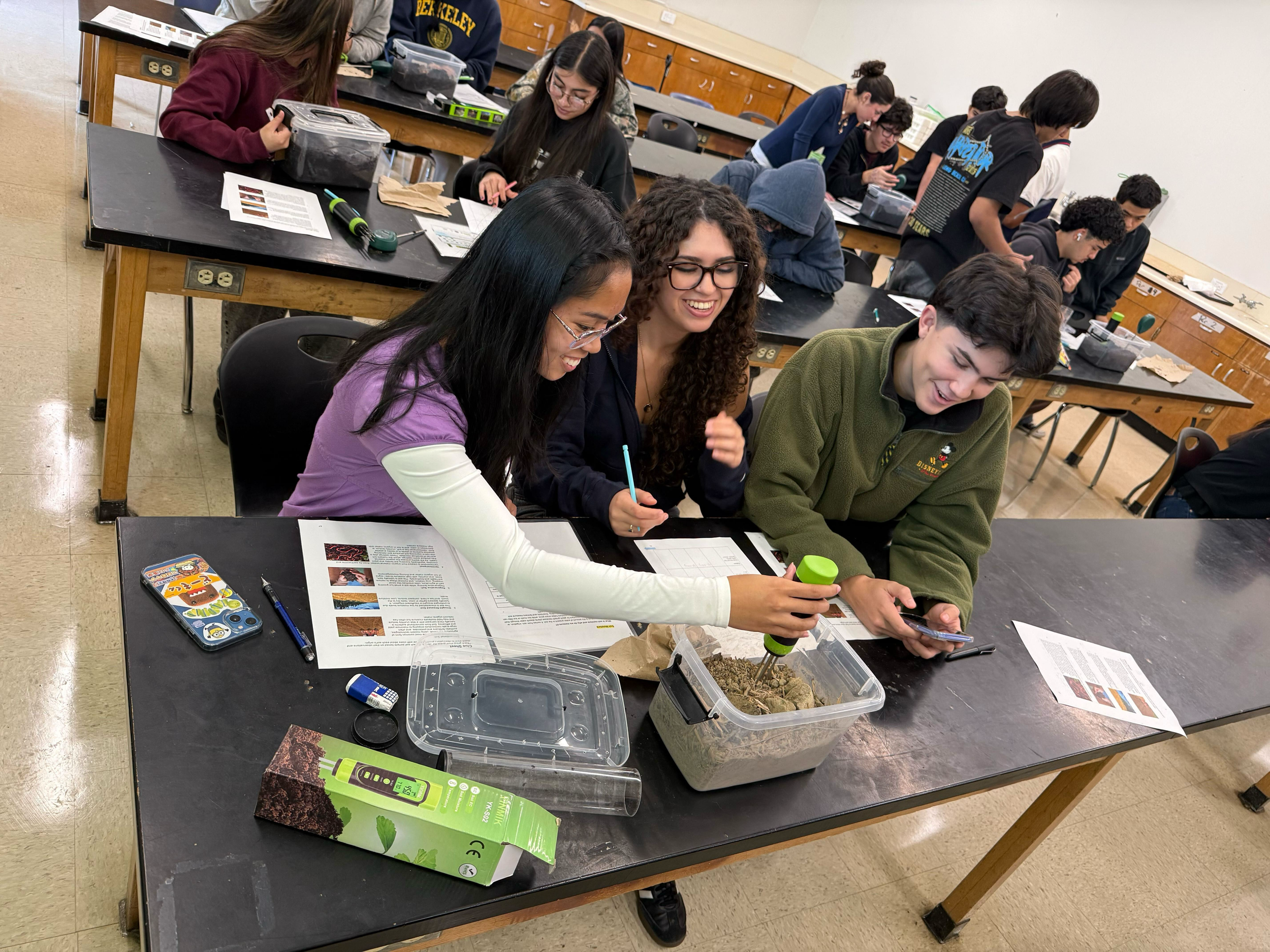
Rio Mesa High School Students Testing Soil Moisture During Their STEM Lab
This month, the STEM Career Pathways in Agriculture team had the opportunity to bring a full suite of programming to Rio Mesa High School, working with nearly 90 students across three classes. From career exploration to exciting STEM labs to an immersive field trip at Driscoll’s, students experienced how science, technology, and agriculture come together to feed our communities.
Discovering Strengths Through the Career Guidance Workshop
All participating classes kicked off with our Career Guidance Workshop, where students completed a personality assessment to learn more about their strengths, interests, and potential career pathways within agriculture. Through a dynamic presentation and group discussions, students were surprised to discover how many diverse and innovative careers exist in the ag industry, from water technology and engineering to entomology, plant science, food safety, and more.
STEM Labs: Soil Science & Hydroponics
Next, students participated in activities designed to connect classroom learning with real-world agricultural science.
Hydroponics Lab: Students constructed their own NFT (Nutrient Film Technique) hydroponic system, de-soiled seedlings, and created a nutrient-rich water sump to support plant growth without soil. This lab introduced students to controlled-environment agriculture and the benefits and challenges to alternative farming.
Soil Health Lab: Other classes explored soil science by comparing four soil samples collected from farms across Ventura and Santa Barbara County. Students examined texture, color, parent material, and characteristics of healthy vs. unhealthy soil. Using meters and sensors, they also measured moisture levels and electrical conductivity, learning how soil health impacts crop growth, water retention, and farm management decisions.
A Day to Remember: STEM Field Trip to Driscoll’s
The entire group then traveled to Driscoll’s for a field experience, one that blended science, discovery, and plenty of fresh berries! Students rotated through three interactive stations:
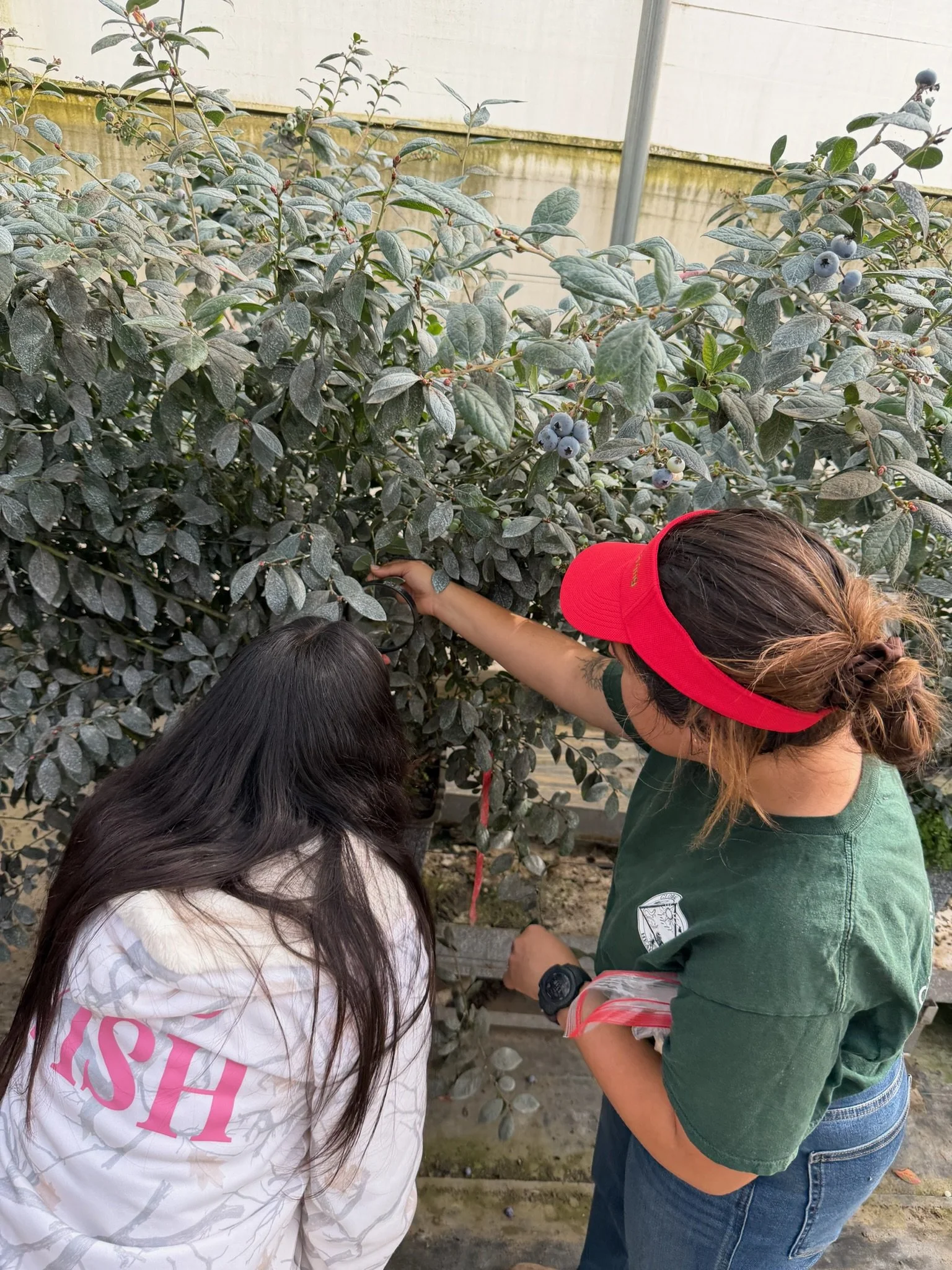
Entomology Station: Led by a Driscoll’s entomologist, students learned about beneficial insects and pest species commonly found in berry production—from lacewings to mealybugs. Students entered a screenhouse to search for mealybugs on blueberry plants, almost like a STEM scavenger hunt. They also viewed lacewing larvae up close and learned how Driscoll’s uses biological controls to protect crops.
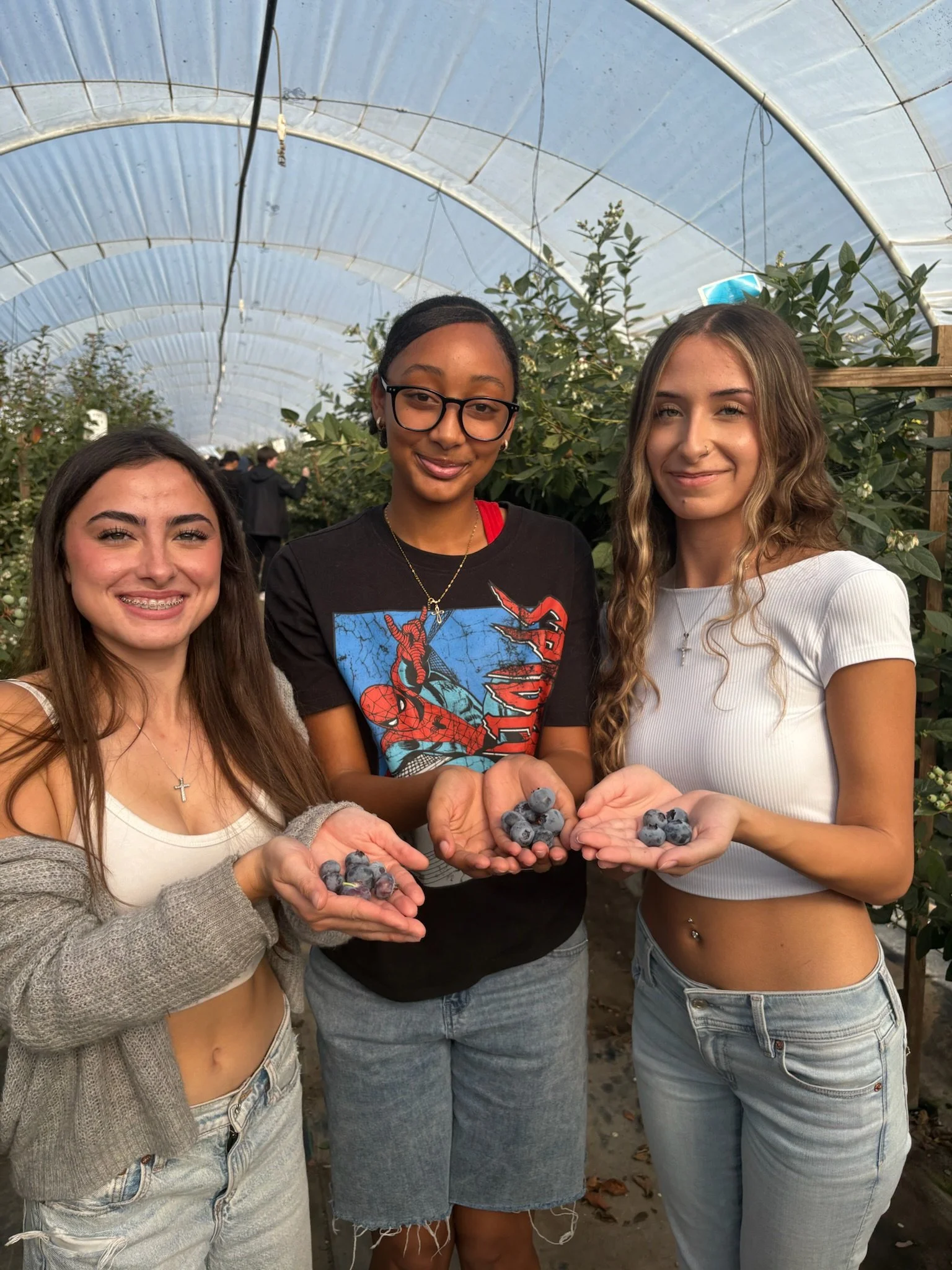
Blueberry Tasting & Plant Walk: Students got to walk through blueberry grazing rows and pick fresh berries straight off the plant. They sampled multiple blueberry varieties and learned how genetics, breeding, and climate shape the flavors we enjoy.
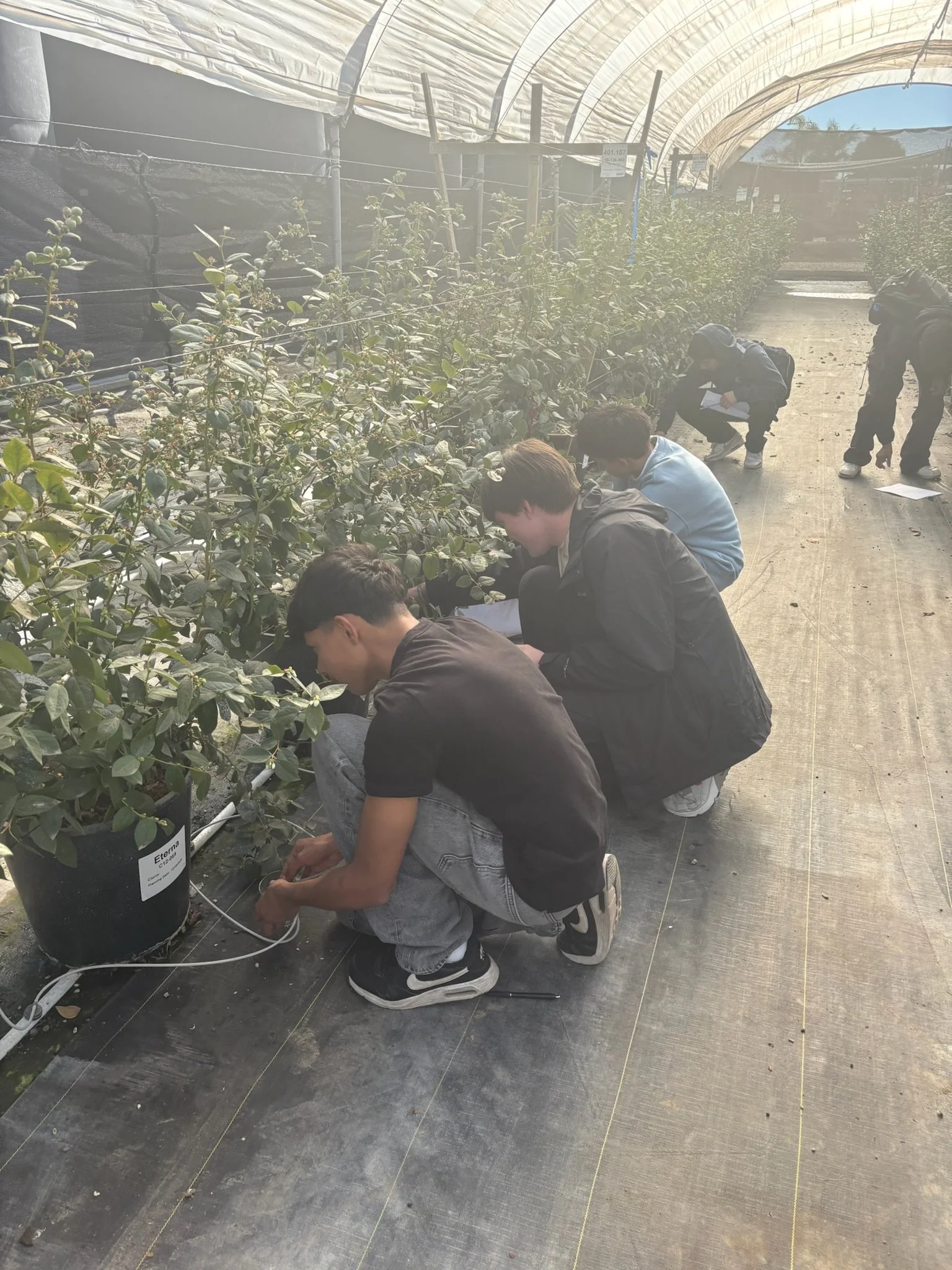
Irrigation & Uniformity Testing Activity: In this water-focused activity, students investigated the difference between irrigation and fertigation and tested the uniformity of an irrigation system used in berry production. Each student collected water from a dripper for one minute, measured the volume, and compared results as a class to determine whether the system’s performance ranked as poor, moderate, good, or very good.
Ending the Day With Sweet Rewards
After a day full of learning and exploration, students were treated to Driscoll’s raspberry clamshells and participated in a fun quiz for prizes. The energy was high, the learning was meaningful, and students left with a deeper understanding of the science, technology, and teamwork behind California’s agriculture.